How to Label Your Home So It Stays Organized
By Amber Swensen
As an Amazon Associate I earn from qualifying purchases. Product links in this post are affiliate links; using them costs you nothing extra. See all our favorite products.
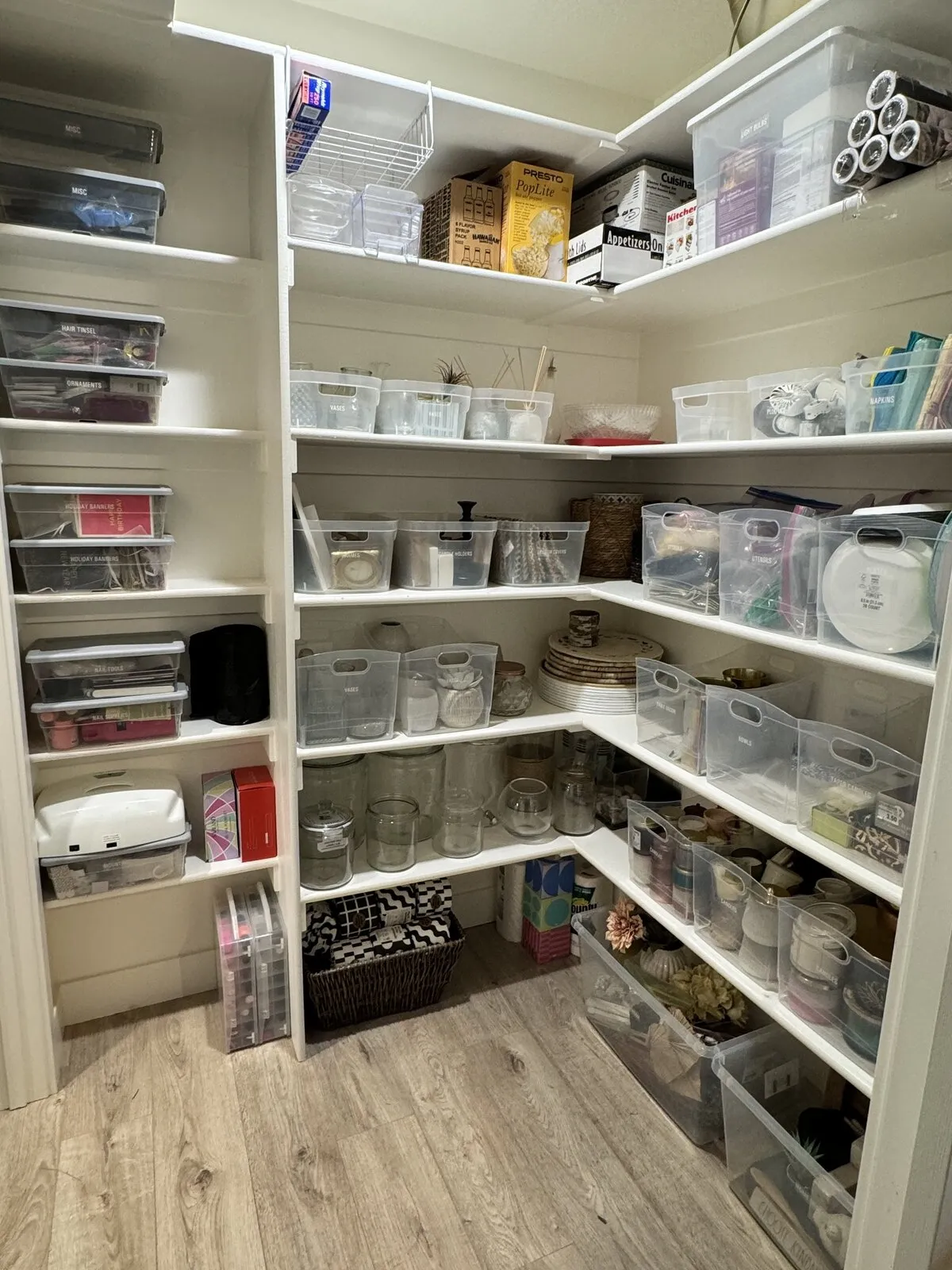
Labels are the step most people skip, and they’re the reason a system keeps working after the professional organizer goes home. When every bin says what belongs in it, nobody has to remember where things go. Your spouse, your kids and your babysitter can all put things back without asking you.
Here’s how I label homes across Utah, and how you can do it yourself.
Step 1: Organize first, label last
Don’t start with the label maker. Labels lock in a system, so the system has to come first:
- Declutter the space. Keep what you use and love, and donate the rest. If that feels overwhelming, our decluttering service can help you get there.
- Group like items together. All the batteries in one spot, all the craft supplies in another.
- Give each group a home by how often you reach for it. Everyday things go at eye level, and rarely used things go up high or down low.
- Live with it for a week or two. If something keeps ending up in the wrong spot, move its home before you print anything.
Once the homes feel right, then label.
Step 2: Choose a label maker you’ll actually use
A label maker isn’t required, but it makes labels look clean and consistent, which makes the whole space feel calmer. The Brother P-touch CUBE Plus is the label maker I use. It prints from an app on your phone, so it’s easy to pick a font and size once and keep every label matching.
For tape, I use two widths:
- 1 inch (24 mm) for bins and baskets, so you can read them from across the room. This 24 mm tape comes in clear and white, which are the colors I use most.
- 1/2 inch (12 mm) for small things like drawer organizers and spice jars. Here’s the half-inch tape I use.
Pick one tape color for the whole house, or at least for each room. Matching labels make a space look finished.
Step 3: Label the category, not every item
A label should tell you what group lives there, not list every item inside. “Batteries” works better than “AA, AAA, 9-volt.” “Baking” works better than “flour, sugar, baking soda.”
Broad labels give the system room to change. When you buy a new kind of snack, it already has a home in the bin labeled “Snacks.”
Step 4: Use clip-on labels for baskets
Woven and fabric baskets are hard to label with tape. Clip-on basket labels slide onto the edge of a basket, so you always know what’s inside and where things go back. They also come off easily when you change what the basket holds. I use them on closet baskets, pantry baskets and toy bins.
Step 5: Make labels kids can read
If your kids can’t read yet, add pictures. A label maker that prints small icons works well, or you can print a photo of what goes in each bin (a picture of LEGO bricks on the LEGO bin) and tape it to the front.
Put kids’ labels where kids can see them: on the front of low bins and at the bottom of the closet, not on a high shelf.
Step 6: Label shelves in shared spaces
In a pantry, food storage room, garage or storage room, label the shelf itself as well as the bins. When a bin comes off the shelf, the shelf label shows exactly where it goes back. This matters most in spaces the whole family uses.
Labels help ADHD brains too
If you or someone in your family has ADHD, labels do a lot of the remembering for you. Combine labels with clear bins and open shelving so things stay visible, which is the idea behind our ADHD-friendly organizing.
What to label first
Start where your family loses things most often:
- Pantry bins and baskets
- Bathroom drawers and under-sink bins
- Kids’ toy bins and closet baskets
- Storage room totes, on at least two sides
- Garage shelves and bins
- File folders and paper trays in the office
Want a professional organizer to do it for you?
Every Orderly Nest Organizing session includes custom labels, so you don’t have to learn a label maker. We work with families across Salt Lake County, Northern Utah County and Southern Davis County. Book a free consultation and we’ll talk through your space, or see all of our favorite organizing products.