How to Organize With Baskets, Bins and Cubes
By Amber Swensen
As an Amazon Associate I earn from qualifying purchases. Product links in this post are affiliate links; using them costs you nothing extra. See all our favorite products.
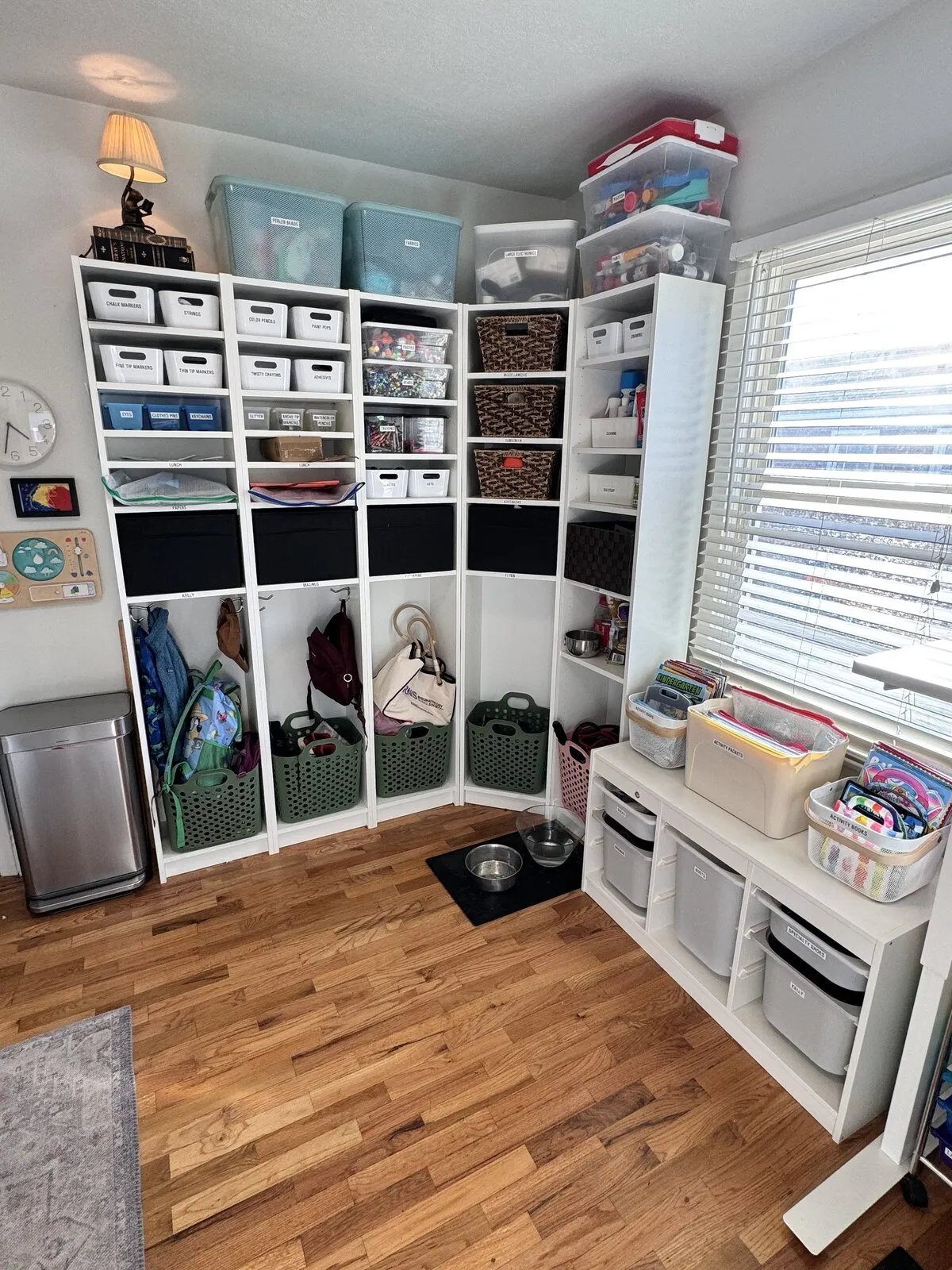
Baskets, bins and cubes are the workhorses of an organized home. They corral the small stuff, hide visual clutter and make cleanup quick, especially in kids’ rooms and playrooms. But buying bins before you know what goes in them is the most common organizing mistake I see.
Here’s how a professional organizer chooses and uses them.
Step 1: Sort before you shop
Gather everything that will go in the space first. For toy storage, that means every toy in the house in one spot. Then decide what to keep, what to donate and what to toss (broken toys and games with missing pieces). Let your kids help decide what stays. They’re more likely to keep up a system they helped build.
If the amount of stuff feels overwhelming, start with our decluttering service. Fewer toys means fewer bins and an easier cleanup.
Step 2: Group by type
Group toys by how kids play, not by size: building toys, pretend play, art supplies, cars and trucks, dolls, puzzles and books. In closets, group the same way: socks, accessories, swimsuits, out-of-season clothes.
Each group gets its own bin or basket. Once you know your groups and roughly how much is in each, you know what to buy.
Step 3: Measure, then choose your containers
Measure your shelves (height, width and depth) before you buy anything. Colors are only suggestions, so choose what fits your style. If you buy something different from what I recommend, just look for similar dimensions.
What I reach for most:
- Closet shelves: medium fabric baskets for clothes, socks, underwear and accessories, and large fabric baskets for sheets, blankets, hats and purses.
- Floors: an extra-large rope basket on a closet floor, or a round rope basket in a bedroom corner, for shoes, stuffed animals, toys or blankets.
- Shelves you use every day: open-top bins for smaller things, so nothing needs a lid lifted.
Step 4: Use cube shelves for toys and kids’ rooms
A 6-cube storage shelf is one of the most useful pieces of furniture for a kid’s room, playroom or the bottom of a closet. Fill it with fabric storage cubes. The ones I like fit the cube shelf well and are sturdier than the flimsier versions, while still being affordable.
Put the toys kids use most in the bottom cubes, at their height. Keep things that need a grown-up’s help, like paint or small-piece sets, up high.
Step 5: Label every bin
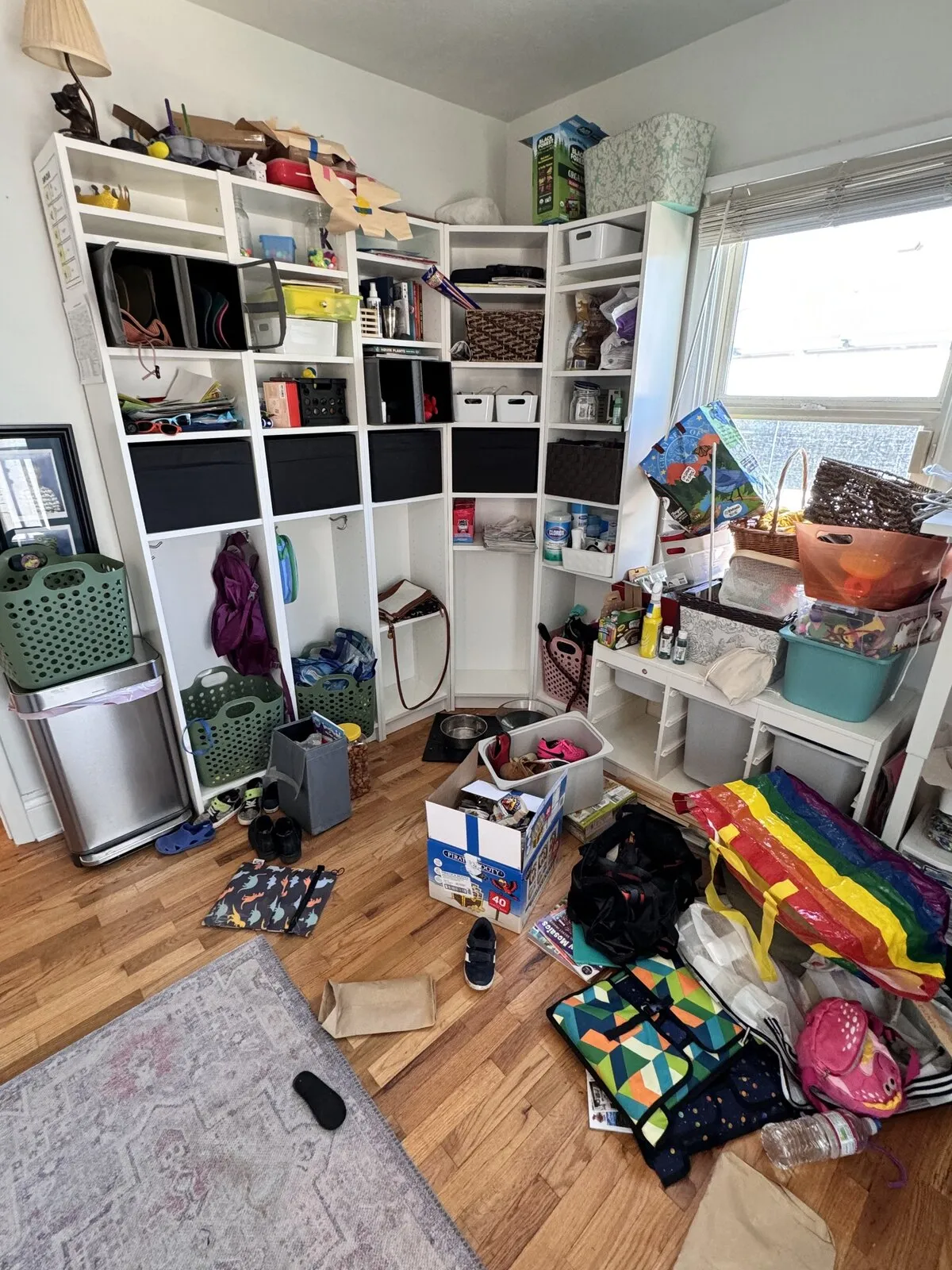
A bin without a label becomes a junk bin. Clip-on basket labels work on fabric and woven baskets, and pictures help kids who can’t read yet. My post on how to label your home walks through it.
Step 6: Rotate toys
Kids play more with fewer toys out. Keep a small selection on the shelves and store the rest in labeled totes in a closet or storage room. Every week or two, swap a few bins. Old toys feel new again, and cleanup stays manageable.
Step 7: Build a quick reset routine
- Set a timer for 5 to 10 minutes before bed, or play one cleanup song.
- Every toy goes back to its labeled bin. If something doesn’t have a home, it either gets one or gets donated.
- Do a bigger edit after birthdays and holidays, when new toys come in.
Simple systems like these also work well for kids with ADHD. See our ADHD-friendly organizing for more ideas.
Let a professional organizer set it up
Orderly Nest Organizing’s professional organizers are moms too, and we set up kids’ rooms, playrooms and toy storage systems that kids can actually use. We serve families across Salt Lake County, Northern Utah County and Southern Davis County. Book a free consultation, or see all of our favorite organizing products.